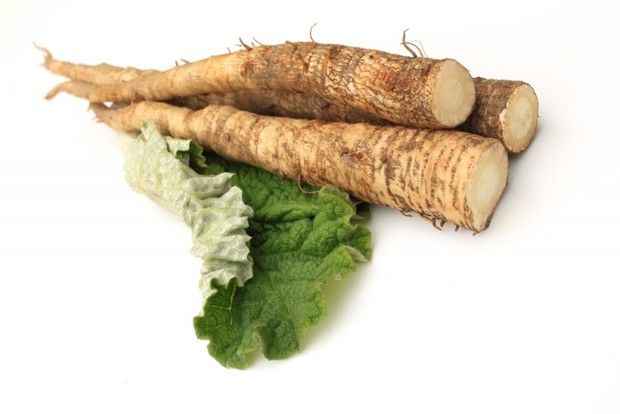
The roots of true burdock contain the polysaccharide inulin (in dry roots — 37— 45%), proteins (about 12%), essential oil (up to 0.17%), palmitic and stearic acids, sitosterol and stigmasterol; in seeds — glycoside arctin, and the leaves contain tannins, mucilage and essential oil. Use in folk medicine In folk medicine, burdock roots are used as a diuretic, diaphoretic, as well as for gout, diabetes, kidney stones, liver, skin diseases (eczema, acne, ringworm), jaundice, stomach ulcer. Infusion of roots in olive oil is known as "rape" oil. as a means that prevents hair loss and promotes the growth of hair on the head. In nutrition, roots can be eaten raw, boiled, baked, fried. You can put burdock roots in soup instead of potatoes and roots, make cutlets and tortillas from them. Baked and fried burdock roots are especially tasty. When frying, a ruddy and sweet crust is formed. Burdock roots are nutritious because they contain 12 percent protein, 0.8 percent fat, and 45 percent inulin (a special starch) that can be converted into sugar. It is possible to obtain sweet jam from burdock roots. Four teaspoons of vinegar essence are poured into half a liter of water and heated to boiling. Then put chopped burdock roots and cook for two hours. Marmalade is made from it. Burdock as a vegetable plant has long been recognized in Japan and is grown there under the name "gobo". It has a tender stem, a thick juicy root.