
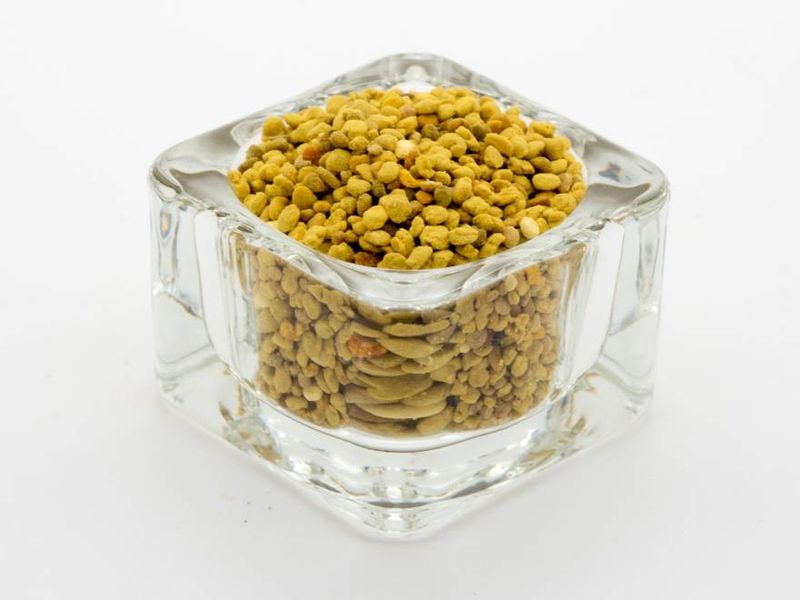
Useful properties of bee pollen Bee pollen also contains a whole set of useful elements, including chromium, lead, copper, iron, selenium, amino acids, folic acid, potassium and calcium. This product contains a total of 27 metals, as well as fructose, glucose, a number of B vitamins (B1, B2 and B6), C, E and A. Bee pollen is a natural antibiotic, such as phytoncide and phytohormone. The ratio of all the above components is perfectly balanced by nature. Pollen that gets to bees and passes through their legs ceases to be an allergen. It turns from the causative agent of disturbances in the immune balance into a substance that contributes to its strengthening. Bee pollen is the second most consumed product for the family in the hive and the first in terms of its importance. Bees work hard to create the necessary supply of honey, which is an indispensable raw material for them. How to use bee pollen correctly There is a rule for everyone - it is to observe the regularity of intake and not to exceed the dosage. For adults - 1 teaspoon with breakfast or before going to bed, for children - half a teaspoon in the morning or in the evening. How to use bee pollen correctly? There is no single answer to this question, because the effect of this ingredient is observed both in the morning and in the evening. Depends on the characteristics of the body. If you suffer from insomnia, it is better to use the remedy at night. It has a general calming effect, helps the body to relax and go to the world of dreams without waking up in the morning. In case of a bad awakening, a feeling of anxiety in the morning, it is better to take the pollen at breakfast.